



Advanced Manual of Admiralty Practice and Ship Arrest in India
PART I: JURISDICTIONAL BASES AND COLONIAL ORIGINS
The Scope of English Statutory Continuance
The operational framework of ship arrest in Indian waters presents a sophisticated integration of historically derived jurisdictional directives and targeted codification under the Admiralty (Jurisdiction and Settlement of Maritime Claims) Act, 2017. To fully comprehend how current maritime procedures function across coastal High Courts, practitioners must trace the legal evolution back to its English statutory foundations. For generations, the principal source of admiralty jurisdiction in India was explicitly linked to the continuous application of ancient British parameters, notably Section 6 of the Admiralty Court Act, 1861, read in conjunction with the definitive mandates of the Colonial Courts of Admiralty Act, 1890.
This historical legacy granted Chartered High Courts (such as Bombay, Calcutta, and Madras) the exact same scope of maritime powers exercised by the High Court of England on its admiralty side. However, this historical continuation created significant procedural challenges when modern maritime commerce began to outpace archaic statutory language. Litigants consistently encountered structural rigidities because the English High Court's powers in 1890 did not account for evolving variations of shipping defaults, modern bareboat arrangements, complex cargo supply chains, or international environmental pollution disputes. This gap frequently required an innovative judicial approach to prevent foreign default vessels from fleeing local waters without providing adequate financial security.
The Shift from Inherent Discretion to Strict Codification
This statutory gap was famously addressed by the Supreme Court of India in the landmark ruling of M.V. Elisabeth v. Harwan Investment and Trading Pvt. Ltd. The Court dynamically expanded the operational understanding of maritime actions by declaring that Indian High Courts possessed an inherent, expansive jurisdiction over all maritime claims. It ruled that this power was not strictly limited by old British statues, effectively integrating modern international conventions into domestic common law. This progressive perspective laid the foundation for the eventual passage of the Admiralty Act, 2017, which transformed this inherent judicial framework into a strict, predictable statutory structure.
The modern 2017 Code completely changed this practice by establishing a clear, self-contained statutory code. It systematically removed the historical reliance on colonial laws while expanding concurrent admiralty jurisdiction to all principal coastal High Courts, including Gujarat, Karnataka, Kerala, Odisha, Andhra Pradesh, and Telangana. Under the current code, the right to arrest a ship is no longer dependent on historical charter inheritances or flexible common law interpretations; it is strictly defined by statutory parameters. The claimant must bring their claim within the strict boundaries of Section 4 and explicitly demonstrate that the vessel is physically located within the territorial waters of India, establishing a firm, predictable baseline for global maritime interests.
PART II: SUBSTANTIVE METAPHYSICS OF ACTIONS IN REM
The Judicial Personification of the Vessel
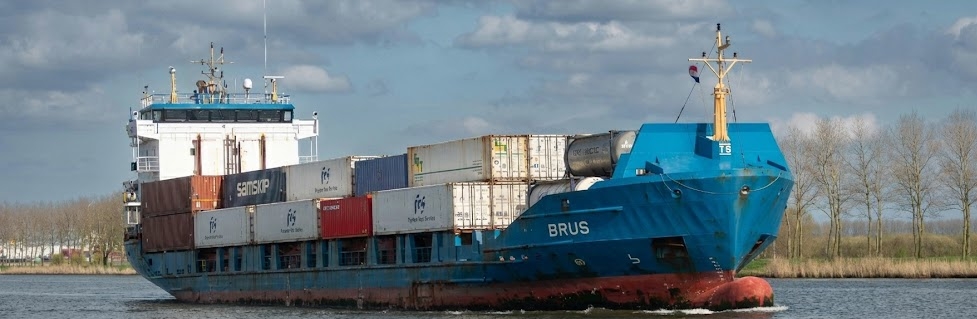
At the center of maritime enforcement strategy sits the concept of the action in rem, an extraordinary legal device that treats the vessel as a distinct juridical entity responsible for its own commercial defaults and operational wrongs. Unlike traditional civil actions, which target a specific individual or corporate defendant, an action in rem names the ship itself as the primary defendant. This legal personification isolates the physical ship asset, allowing a claimant to secure an arrest warrant the moment the vessel arrives within the sovereign territorial waters of India, extending up to 12 nautical miles from the baseline.
This framework acts as an institutional counterweight against the common asset-shielding strategies employed by single-ship corporate shell networks globally. The immediate physical detention of the vessel creates substantial leverage, compelling foreign or absent owners to submit to the jurisdiction of the domestic court. To recover control of their asset, owners or interested Protection and Indemnity (P&I) Clubs must enter a formal appearance and deposit adequate cash or substitute bank guarantees into the court's registry, effectively transferring the litigation's financial exposure from the physical ship to the deposited funds.
PART III: COMPREHENSIVE TEXTUAL ANNOTATION OF SECTION 4 CLAIMS
The Boundaries of Actionable Disputes
A High Court's authority to grant an initial arrest order is strictly confined to the statutory maritime claims explicitly categorized under Section 4 of the Admiralty Act, 2017. Litigants cannot expand these categories through loose interpretations or analogical scaling. To successfully invoke admiralty jurisdiction, the underlying dispute must seamlessly integrate into one or more of the following defined headings:
Proprietary Disputes and Ownership Alignment: Under Section 4(1)(a) and (b), the act permits the court to adjudicate disputes regarding the split possession, contested ownership, employment, or earnings allocation of a vessel. This enables disgruntled co-owners or title claimants to freeze operations through proactive arrests until long-term structural or commercial equities are settled.
Mortgage Enforcement and Financial Protection: Section 4(1)(c) covers claims arising out of any mortgage, hypothecation, or similar proprietary charge registered against the ship. This provides international marine lenders and shipping financiers with a direct mechanism to assert security over default vessels transiting Indian trade lanes.
Operational Tort and Collision Liabilities: Section 4(1)(d) handles claims for physical damage or consequential loss caused directly by the operation of a vessel. This covers collisions within port limits, structural damages inflicted upon harbor infrastructure, or terminal breakwaters due to navigation errors, generating an immediate legal platform for local port trusts or private operators to hold the ship accountable.
Loss of Life and Personal Injury Claims: Section 4(1)(e) permits seafarers, passengers, or surviving relatives to seek compensation for fatalities or severe personal injuries directly connected with the vessel's operation, establishing an essential humanitarian and safety mechanism.
Cargo Loss and Carriage Breaches: Addressed under Section 4(1)(f) and (g), these provisions manage claims stemming from loss, systemic wetting, structural deformation, or short-landing of goods carried under bills of lading, voyage charters, or multimodal transportation frameworks. The physical cargo asset or its loss serves as the basis for the in rem claim against the carrying vessel.
Charterparty and Hire Agreements: Claims related to unpaid hire, freight defaults, or operational layout breaches stemming from time or voyage charter arrangements under Section 4(1)(h).
Operational Services (Salvage, Towage, and Pilotage): Sections 4(1)(i), (j), and (k) cover essential operational maritime services. Salvage rewards are highly protected under this framework; professional salvors can immediately halt a rescued vessel to secure their reward, preventing the owner from sailing away from the salvage zone before providing proper financial cover.
Bunkers, Supplies, and Necessaries: Under Section 4(1)(l), claims for the supply of goods, materials, provisions, services, bunker fuel, and specialized equipment delivered to the ship for its upkeep, operational maintenance, or immediately planned voyages are recognized as actionable maritime claims. However, post-2017 jurisprudence requires the claimant to prove that the true owner or bareboat charterer is directly liable in personam for the specific order before an arrest order can be sustained against the vessel.
PART IV: MARITIME LIENS, SYSTEMIC PRIORITIES, AND ASSET LIQUIDATION
The Hierarchical Distribution of Sale Proceeds
When an owner defaults, vanishes, or completely abandons an arrested vessel, the High Court will ultimately order a public auction through the Court Marshal to liquidate the ship into a clean fund. The distribution of this fund is strictly governed by the hierarchy of priorities set forth in Sections 9 and 10 of the Admiralty Act, 2017. General commercial creditors do not stand on equal footing with privileged lienholders.
Section 9 strictly codifies the narrow categories that qualify as true maritime liens in India: claims for master and crew wages; claims for personal injury or loss of life; salvage rewards; port, canal, or waterway dues; and maritime tort claims resulting from physical loss or damage caused directly by the ship's navigation. These liens accrue automatically by operation of law and run silently with the hull, surviving even a subsequent private sale to a bona fide purchaser. When distributing the judicial fund, the sequence is rigidly applied:
- Marshal and Court Expenses: Absolute top-tier priority is granted to the Sheriff or Court Marshal's costs. These cover the expenses required to safely anchor, provision, fuel, and protect the vessel during its period of judicial custody.
- Maritime Liens under Section 9: These claims are paid next. If multiple liens exist, they typically rank in inverse chronological order (the last in time is paid first), based on the equitable logic that the final service (such as an emergency salvage operation) successfully preserved the asset for the benefit of all preceding creditors.
- Registered Mortgages: Validly recorded ship mortgages and hypothecations occupy the third position, providing institutional financiers with clear statutory visibility over their recovery prospects.
- Statutory Maritime Claims: General claims under Section 4 (such as unpaid bunker invoices ordered by time charterers) sit at the bottom of the distribution ladder, frequently absorbing losses if the vessel's sale price fails to clear the higher-tier liabilities.
PART V: PROCEDURAL PROTOCOLS AND EXECUTING ARREST
The Operational Roadmap for Filing and Service
The operational cadence of ship arrest demands flawless procedural execution. Because modern vessels can load, discharge, and exit domestic waters within tight windows, admiralty solicitors must move from instruction to implementation within hours. The procedural lifecycle involves specific, sequential steps:
Authentication of Foreign Documentation: To initiate a suit on behalf of an international client, a formal Power of Attorney (POA) must be executed. To be admissible before an Indian High Court, the POA must be fully notarized and formalized either through an official Apostille under the Hague Convention or via direct authentication from the nearest Indian Consular office. In scenarios of extreme operational urgency, courts frequently exercise their equitable discretion to accept electronic filings and scanned documents, paired with a formal undertaking from local counsel to submit the original paper instruments within a fixed statutory window.
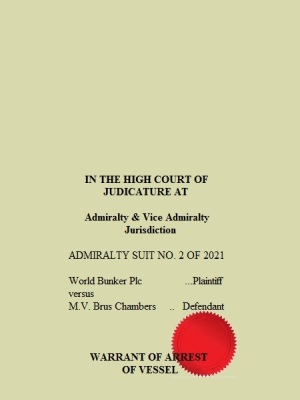
Filing and the Prima Facie Test: The suit is formally initiated by presenting an Admiralty Plaint alongside an urgent interim application for arrest before the original side of the competent High Court. The claimant's counsel must demonstrate a prima facie "reasonably arguable best case," confirming that the claim falls squarely within Section 4 and that the vessel is physically located within the court's geographical jurisdiction. Once satisfied, the presiding judge signs the formal Judge's Order and issues the arrest warrant.
Physical Execution by the Court Marshal: The warrant is handed to the Court Marshal or Sheriff's officer, who travels to the port terminal or anchorage coordinates. The officer formally executes the arrest by pasting the physical warrant onto a conspicuous section of the ship's superstructure (typically the captain's bridge or main mast), serving copies on the Master, and issuing immediate electronic detainment notices to the Port Trust, Customs Authorities, and the state's Coast Guard to suspend the vessel's port clearance.
PART VI: FINANCIAL EXPOSURE AND WRONGFUL ARREST REMEDIES
The Strategic Balance of Financial Risk
Once a vessel is safely detained, the owner or their P&I Club must negotiate the deployment of financial security to secure a release order. This security is almost exclusively provided in the form of a cash deposit or a verified bank guarantee issued by a domestic Indian bank, effectively standing as a financial proxy for the physical hull. Importantly, Indian admiralty rules do not force an arresting claimant to deposit proactive financial countersecurity as an absolute precondition when initiating a suit. While an owner may formally petition the court to demand countersecurity from a weak or asset-less claimant, the granting of such orders remains a discretionary power handled on a case-by-case basis.
This structural framework creates an efficient operational environment for claimants but is balanced by the severe consequences attached to a finding of wrongful arrest. To claim damages for a wrongful arrest in India, a shipowner faces an exceptionally high burden of proof. It is not enough to simply win the underlying case on its merits or demonstrate that the claim was eventually dismissed. The shipowner must robustly prove that the claimant acted with deliberate malice, bad faith, or a reckless disregard for the truth (amounting to crassa negligentia). If malicious intent is proved, the court can penalize the claimant, holding them liable for all consequential losses, including lost charter hire, port demurrage, and the owner's legal costs.
PART VII: INSTITUTIONAL RESTRICTIONS: VESSEL TRAILING AND CHARTERERS
Veil Piercing and the Rules of Associated Asset Separation
The practice of tracking maritime assets across interconnected corporate networks is heavily regulated under modern Indian shipping jurisprudence. Section 5(2) of the Admiralty Act explicitly permits the execution of sister ship arrests, defining a sister ship as any alternative vessel wholly owned by the exact same legal entity that bears personal liability for the primary debt. However, Indian courts consistently refuse to extend this mechanic to "associate ships" vessels owned by separate, distinct sister subsidiaries operating under a shared parent corporate group. To arrest an associate ship, a claimant must actively move to pierce the corporate veil, which requires establishing clear proof of corporate fraud or showing that the separate corporate structures are a complete sham explicitly set up to evade pre-existing liabilities. Standard shared directorships or overlapping institutional shareholdings alone do not justify look-through actions.
Similarly, strict liability operational walls apply when dealing with charterers. A vessel can be legally arrested for claims where personal liability targets either the true shipowner or a bareboat (demise) charterer, as the latter maintains complete operational custody and proprietary control of the ship. However, a ship cannot be arrested or detained for liabilities incurred exclusively by a time charterer or a voyage charterer. This protection is highly relevant in bunker supply disputes. If a time charterer defaults on fuel purchases, the bunker supplier holds a valid contractual claim against that specific charterer but does not possess an automatic right to arrest the owner's ship, because the true owner was not the party liable in personam for the debt. This statutory structure requires suppliers to execute thorough due diligence before extending credit across international distribution channels.
PART VIII: INTERACTION WITH CONCESSIONAIRES AND BANKRUPTCY LAW
Navigating Overlapping Enforcement Regimes
Modern Indian admiralty practice frequently intersects with broader regulatory frameworks, creating unique challenges for legal strategy. A key area of development is the relationship between admiralty courts and public port infrastructures, particularly under the Major Port Authorities Act, 2021. Port trusts hold an independent statutory right to detain any vessel for unpaid port dues, berth hire, or damage to port property. This administrative detention operates independently of a judicial arrest warrant. Where a private claimant secures a High Court arrest over a vessel already detained by a port, the port's claim for operational dues is generally treated as a super-priority preservation expense, ensuring it is cleared first from any eventual judicial sale proceeds.
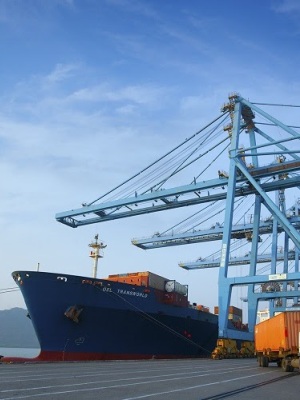
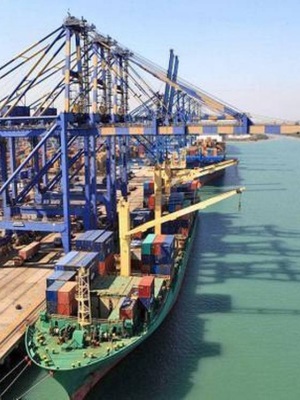
This operational autonomy also extends to private terminal operators and Public-Private Partnership (PPP) concessionaires. Modern court decisions have affirmed that private concessionaires operating specialized port terminals are fully entitled to directly initiate admiralty suits and execute ship arrests for unpaid terminal berthage or container handling costs. The courts recognize that these private operators hold valid maritime claims under Section 4, allowing them to pursue independent in rem remedies without needing to route their actions through the overarching public port bureaucracy.
Furthermore, an important structural challenge arises when admiralty actions intersect with corporate insolvency proceedings under the Insolvency and Bankruptcy Code (IBC). When a corporate shipowning entity enters insolvency, the IBC triggers an immediate, automatic statutory moratorium on all litigation against the company's assets. Indian courts have had to carefully balance this rule against traditional maritime laws. Current jurisprudence indicates that while a pre-existing ship arrest can continue to hold the vessel as secured property for the claimant, initiating a brand-new action in rem or seeking a fresh arrest warrant after an IBC moratorium has been formally declared is generally restricted. This requires maritime creditors to coordinate closely with insolvency professionals to protect their recovery positions within the liquidation framework.