Arresting a Vessel from Gujarat High Court
Arresting a Ship under the Admiralty Jurisdiction of the Gujarat High Court: A Detailed Legal Perspective
The Gujarat High Court, under the provisions of the Admiralty (Jurisdiction and Settlement of Maritime Claims) Act, 2017 ("Admiralty Act, 2017"), has been conferred with significant powers to adjudicate maritime claims and to grant orders for the arrest of vessels. Section 4 of the Admiralty Act, 2017, empowers the Gujarat High Court to hear admiralty suits, including suits for the arrest of a vessel, provided that the vessel in question is located within the territorial waters of the state of Gujarat.
Jurisdiction of the Gujarat High Court in Admiralty Matters
Gujarat, situated along Indias western coastline, is endowed with a rich maritime history. With over 1600 kilometers of coastline, Gujarat not only serves as a vital gateway to international shipping lanes but also acts as the primary maritime conduit to the Middle East, Africa, and Europe. In light of this, the jurisdiction of the Gujarat High Court over maritime matters is of significant importance, especially in matters relating to the arrest of vessels.
The Gujarat High Court's authority to entertain admiralty suits stems from Section 4 of the Admiralty Act, 2017, which consolidates the maritime laws of India and provides clarity on the jurisdictional issues related to the arrest of vessels. The act stipulates that the High Court of a state, in whose territorial waters a vessel is found, has the jurisdiction to entertain an admiralty suit. This includes the power to arrest the vessel, provided the claimant can establish a maritime claim as specified under the Admiralty Act, 2017.
Territorial Waters and the Scope of the Gujarat High Court's Admiralty Jurisdiction
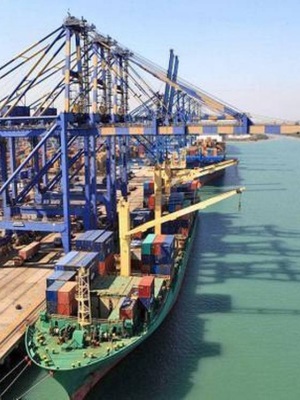
The jurisdiction of the Gujarat High Court extends over the territorial waters of the state, which include all ports and harbors located along the coastline of Gujarat. The state is home to one major port, the Deendayal Port (formerly known as Kandla Port), as well as numerous non-major ports and facilities for ship recycling. The presence of such significant maritime infrastructure within the state strengthens the Gujarat High Court's jurisdictional claim over matters concerning vessels operating within these waters.
In particular, Gujarats territorial waters extend to cover the entire length of its coastline and the offshore areas around its ports. Given the strategic positioning of Gujarat as a maritime hub, the state hosts a plethora of ports and harbors that play a crucial role in international shipping and trade. Some of the major ports and harbors under the Gujarat High Courts jurisdiction include:
-
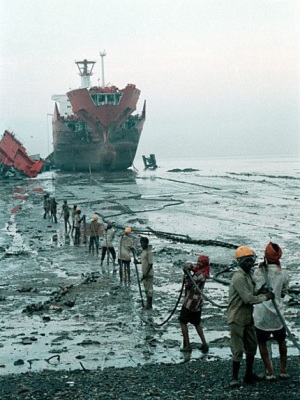
Alang - Renowned for being the largest ship recycling yard in the world.
-
Bedi - A port located near Bhavnagar, important for bulk cargo.
-
Bhavnagar - A key port located on the Gulf of Khambhat.
-
Bilimora - A minor port along the Gujarat coastline.
-
Dahej - Known for its industrial significance and the petrochemical industry.
-
Ghogha - Located near Bhavnagar, used primarily for cargo handling.
-
Hazira - A major industrial port known for bulk cargo and petrochemical products.
-
Jafrabad - Another port used primarily for cargo handling.
-
Jakhau - A fishing and cargo handling port located in the Kutch region.
-
Jodia - Known for its port facilities in the Kutch region.
-
Kandla (Deendayal Port) - The largest and most significant port in Gujarat, regulated by the Government of India.
-
Magdalla - A port located in the southern part of Gujarat.
-
Mandvi - Known for small-scale port activities and coastal shipping.
-
Maroli - A minor port used primarily for cargo handling.
-
Mundra - One of the largest private ports in India.
-
Navlakhi - Located near the Gulf of Kutch, primarily used for cargo.
-
Okha - A port located on the western coast of Gujarat.
-
Porbandar - Famous as the birthplace of Mahatma Gandhi, and a vital port in the region.
-
Pipavav - A major port known for its container handling facilities.
-
Salaya - Known for handling crude oil and bulk cargo.
-
Sikka - A port located in the Kutch region with a focus on bulk cargo.
-
Tuna - A port located on the Kutch coast.
-
Veraval - A major fishing port and also involved in cargo handling.
-
Victor - A minor port involved in cargo handling.
The presence of such varied and significant ports within the jurisdiction of the Gujarat High Court provides the court with substantial authority over admiralty matters, particularly the arrest of ships that dock at or pass through these ports.
Grounds for the Arrest of a Vessel in Gujarat
The arrest of a vessel is typically sought in cases where the claimant possesses a maritime claim as specified under the Admiralty Act, 2017. The Act enumerates specific grounds upon which a vessel may be arrested, including, but not limited to:
-
Claims for goods or materials supplied to the vessel: Claims for the supply of necessaries to the vessel, such as fuel, food, water, and provisions, can serve as a basis for the arrest.
-
Claims arising from damage caused by the vessel: This includes damage caused to property or other vessels due to the negligence or misconduct of the vessel's crew or operators.
-
Claims for services rendered to the vessel: Services such as towage, salvage, and repairs can form the basis of a maritime claim leading to the arrest of a vessel.
-
Claims arising from contracts of carriage: This includes claims for the carriage of goods by sea under contracts such as bills of lading or charterparties.
-
Claims arising from a maritime lien: A maritime lien refers to a special property right that arises automatically in favor of certain claimants, such as shipbuilders or crew members, for work done or materials supplied to a vessel.
Once the maritime claim is established, the party seeking the arrest must file a suit in the Gujarat High Court and apply for an order of arrest. The court will then assess the claim and, if satisfied, issue an arrest warrant for the vessel. The warrant will be executed by the Sheriff or Marshal of the court, who is responsible for physically detaining the vessel.
Process for the Arrest of a Vessel
The process of arresting a vessel within the Gujarat High Courts jurisdiction follows a set of legal procedures as outlined under the Admiralty Act, 2017. This process involves several steps:
-
Filing of the Admiralty Suit: The claimant must file a suit before the Gujarat High Court detailing the maritime claim and the grounds for the arrest of the vessel.
-
Application for Arrest: The claimant submits an application for the arrest of the vessel, supported by relevant documents, evidence of the maritime claim, and an affidavit.
-
Court Hearing: The Gujarat High Court will consider the application for the arrest. If the court finds that the claim is prima facie valid and that there is a risk of the vessel leaving the jurisdiction, it may grant the order of arrest.
-
Issuance of the Arrest Warrant: Upon approval by the court, a warrant for the arrest of the vessel will be issued. This warrant is typically served by the Sheriff or Marshal, who will physically detain the vessel in the port.
-
Execution of the Arrest: The vessel is seized and detained, effectively preventing the shipowner from removing the vessel from the jurisdiction until the claim is resolved. The vessel is typically detained in port, and the claimant is required to provide security for the maintenance and care of the vessel while it is under arrest.
-
Post-Arrest Procedure: Once the vessel is arrested, the court will schedule hearings to determine the validity of the claim and the circumstances surrounding the arrest. Depending on the outcome, the vessel may be released upon the payment of a bond or other security, or it may remain under arrest pending resolution of the dispute.
Release of the Arrested Vessel
The release of an arrested vessel may be sought by the shipowner or a party with an interest in the vessel. Release can occur in two primary ways:
-
Payment of the Claim: The vessel can be released if the claim is satisfied, either through payment of the amount claimed or a settlement between the parties.
-
Provision of Security: The vessel may be released if the shipowner or a third party provides adequate security for the claim. This could take the form of a bank guarantee, bond, or cash deposit equivalent to the value of the claim.
In the event that the claim is not settled or resolved, the claimant may seek the judicial sale of the vessel, which is another procedure governed by the provisions of the Admiralty Act, 2017.
The Gujarat High Court, empowered by the Admiralty (Jurisdiction and Settlement of Maritime Claims) Act, 2017, plays a crucial role in the enforcement of maritime claims through the arrest of vessels. With its vast territorial waters, numerous ports, and strategic location as a maritime hub, Gujarat serves as an important jurisdiction for the arrest of vessels in India. The arrest procedure is governed by clear legal principles that ensure the protection of maritime rights while also providing a mechanism for the resolution of disputes involving vessels within the state's jurisdiction. Through this legal framework, the Gujarat High Court upholds its authority in maritime law, ensuring that claims are adjudicated fairly and promptly, contributing to the orderly functioning of international and domestic maritime trade.
Arresting a Ship in India

India
Ship Arrest
All about Ship Arrest in India and Admiralty Laws
View more
How to
Proceed?
Step-by-Step Guide to Arrest a Ship Anywhere in India
View more
How much
will it Cost?
Professional fees and expenses explained
View more
Who
We Are?
Shipping and Commercial Arbitration specialist
View more
Back to
Home Page
View more
CONTACT
Dr. Shrikant Pareshnath Hathi
Managing Partner,
BRUS CHAMBERS, Advocates & Solicitors,
8, Rajabahadur Mansion, 3rd Floor,
Ambalal Doshi Marg, Fort, Behind BSE,
Mumbai 400001, India
Phone: +91-9769946865
Web: More info
Email: shrikant@bruschambers.com
OR
Ms. Binita Hathi
Partner,
BRUS CHAMBERS, Advocates & Solicitors,
8, Rajabahadur Mansion, 3rd Floor,
Ambalal Doshi Marg, Fort, Behind BSE,
Mumbai 400001, India
Phone: +91-9769946864
Web: More info
Email: binita@bruschambers.com