How to proceed?
Arrest of a vessel in India involves several
legal and procedural steps that are governed by the Admiralty
(Jurisdiction and Settlement of Maritime Claims) Act, 2017. The
following is a detailed guide on how to arrest a ship in India,
including legal principles, required documents, and case laws to
support the arrest. a. Identify the Maritime Claim:
If you have a maritime claim against a vessel owner, a vessel, or
its sister vessel, the offending vessel can be arrested. Under
Sections 4 and 5 of the Admiralty Act, 2017, a wide range of
maritime claims, including but not limited to bunker dues, repairs,
collisions, cargo, charterparty disputes, and salvage, can form the
basis of an arrest. Case Law: In M.V. Elisabeth
and Ors. v. Harwan Investment and Trading Pvt. Ltd. (AIR 1993
SC 1014), the Supreme Court of India held that the arrest of a
foreign vessel is permissible under Indian admiralty law for
maritime claims. b. Determine Jurisdiction: The
High Court with admiralty jurisdiction where the vessel is located
has the authority to order the arrest. Indian courts follow
international principles, as confirmed in Liverpool & London
S.P. & I. Association Ltd. v. M.V. Sea Success I & Anr.,
(2004) 9 SCC 512, regarding the arrest of vessels within the Indian
territorial waters. c. Sister Ship Arrest: Section
5(2) of the Admiralty Act, 2017, allows for the arrest of a sister
ship if it is owned by the same company that owns the offending
vessel. In O.N.G.C. v. M.V. Monika and Ors. (1994 Supp (2)
SCC 492), the court upheld the arrest of a sister vessel as valid. a. Engage a Specialized Law Firm:
Engaging a law firm specializing in maritime law is crucial due to
the fast-paced nature of ship arrest cases. The firm's prompt action
is necessary as vessels may leave port immediately after loading or
unloading is complete. In the case of Siemens Ltd. v. M.V. Fair
Express, (2010), the court emphasized the need for urgency in
filing an arrest application. b. Power of Attorney (PoA): The
claimant must issue a PoA in favor of the individual signing the
pleadings. If the PoA is executed by a foreign company, it must be
notarized and legalized. A scanned copy is acceptable initially, but
the original must be submitted to the court later. The Bombay High
Court in Parekh Marine Agencies Pvt. Ltd. v. M.T. Eastern Ocean,
(2015) held that non-production of the original PoA at the time of
filing is not fatal as long as an undertaking is provided to produce
it later. a. Drafting the Plaint: The
plaint should be comprehensive, stating the title, the name of the
vessel with the IMO number, its flag, and confirmation that the
vessel is within Indian territorial waters. It should also clearly
establish that the claim falls under the purview of the Admiralty
Act, 2017. The court in Tag Offshore Ltd. v. M.V. Chios Pride
(2012) observed that precise drafting of the plaint is critical to
securing an arrest order. b. Interim Application for Arrest:
Along with the plaint, an interim application seeking the arrest of
the vessel must be filed. The affidavit supporting the application
must include an undertaking to cover any potential damages arising
from a wrongful arrest. In Videsh Sanchar Nigam Ltd. v. The
Kapitan Kud, (1996) 7 SCC 127, the Supreme Court reinforced the
principle that the plaintiff must provide an undertaking as security
for the defendant against wrongful arrest. a. Check for Caveats: Before
filing the arrest application, conduct a search in the caveat
registry to check if any party has filed a caveat against the arrest
of the vessel. The results of the search must be included in the
affidavit submitted to the court. M/s Transworld Shipping
Services India Pvt. Ltd. v. M.V. MSC Shikha, (2018),
highlighted the importance of checking the caveat registry to avoid
any legal repercussions for wrongful arrest. a. Dispensing with the Warrant:
An application should be made to the court to dispense with the
warrant of arrest in cases where immediate enforcement is necessary.
In Agarwal Shipping Co. Pvt. Ltd. v. M.T. Mohave Mariner,
(2019), the court allowed the arrest without the issuance of a
formal warrant, considering the urgency of the situation. a. Obtain Arrest Order: Once the
Hon'ble court is satisfied with the merits of the case, it will
pass an order of arrest. This order, along with the warrant of
arrest (if not dispensed with), must be served on the master of the
vessel, the port, customs authorities, and/or the vessel's agent. The
State of Maharashtra v. M.V. Sea Lark (2011) confirmed that the
arrest order must be executed in accordance with the court's
directions to ensure that the vessel is placed under judicial
custody. b. Service of Arrest Order: Upon
service, the customs authorities will withhold the port clearance
certificate, and the vessel will be held under custodia legis by the
port authority. The case of The Board of Trustees of the Port of
Mumbai v. M.V. Jawad (2007) emphasized that the vessel remains
in the custody of the court through the port authority once the
arrest order is served. a. Security for Release: The
arrested vessel can be released if adequate security is provided by
the owner, usually in the form of a bank guarantee or cash deposit.
The amount of security should correspond to the value of the claim,
including interest and costs. In Sunil B. Naik v. Geowave
Commander, (2018) 5 SCC 505, the Supreme Court ruled that the
security provided must be sufficient to cover all possible claims
related to the arrest. b. Application for Release: If
security is provided, the claimant must file an application for the
release of the vessel. The vessel can also be sold if the owner
fails to secure its release. In Siemens Ltd. v. M.V. Fair
Express (2010), the court ordered the sale of the vessel after
the owner failed to furnish security. This step-by-step guide provides a detailed
roadmap to arresting a ship in India under the Admiralty
(Jurisdiction and Settlement of Maritime Claims) Act, 2017. The
legal processes are dynamic and require careful attention to detail
and adherence to procedural requirements.Step-by-Step Guide to Arrest a Ship Anywhere in India
1. Preliminary Assessment of Maritime
Claim
2. Preparation of Pleadings
3. Filing the Admiralty Suit
4. Caveat Search
5. Application for Dispensation of
Warrant of Arrest
6. Issuance of Arrest Order and Service
7. Post-Arrest Proceedings
Arresting a Ship in India



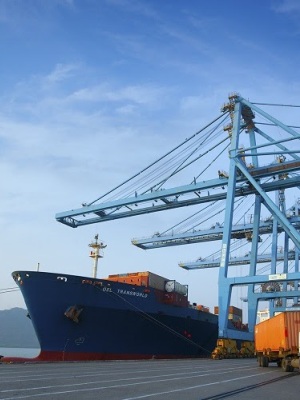
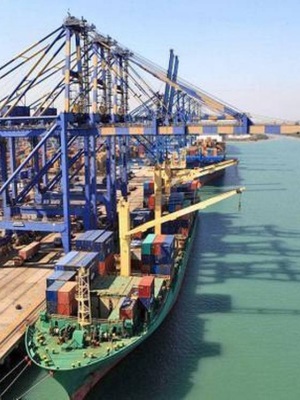
India
Ship Arrest
All about Ship Arrest in India and Admiralty Laws
View more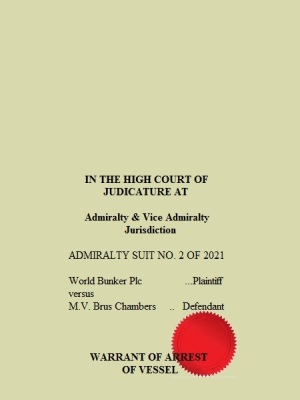
How to
Proceed?
Step-by-Step Guide to Arrest a Ship Anywhere in India
View more
How much
will it Cost?
Professional fees and expenses explained
View more
Who
We Are?
Shipping and Commercial Arbitration specialist
View more
Back to
Home Page
View more
CONTACT
Dr. Shrikant Pareshnath Hathi
Managing Partner,
BRUS CHAMBERS, Advocates & Solicitors,
8, Rajabahadur Mansion, 3rd Floor,
Ambalal Doshi Marg, Fort, Behind BSE,
Mumbai 400001, India
Phone: +91-9769946865
Web: More info
Email: shrikant@bruschambers.com
OR
Ms. Binita Hathi
Partner,
BRUS CHAMBERS, Advocates & Solicitors,
8, Rajabahadur Mansion, 3rd Floor,
Ambalal Doshi Marg, Fort, Behind BSE,
Mumbai 400001, India
Phone: +91-9769946864
Web: More info
Email: binita@bruschambers.com