All About Time and Voyage Charterparties; Booking Note and Fixture Note

Contributed by Ms. Aanchal Chaurasia
Although it is important to appreciate that the terms of a particular charterparty may make fundamental changes to the customary rights and obligations of shipowners and charterers, time and voyage charterparties normally have the following differences:
Under a voyage charter the shipowner is normally obliged, in consideration for the payment of the freight by the charterer, to pay for all the operating costs of the ship. However, under a time charter the cost allocation is more balanced whereas the shipowner pays for the crew and the cost of insuring the ship, the charterer normally pays for bunkers, port and stevedoring costs, agencies, pilotages and all other usual expenses.
Since a voyage charter is a contract for a particular voyage most of the relevant factors (e.g. the freight, cargo, loading and discharging ports etc.) will have already been agreed during the pre-fixture negotiations and become terms of the contract. Consequently, there is limited need for the voyage charterer to play an active part in the subsequent operation of the vessel when performing the charter. However, a time charter is a contract which gives the charterer the ability to control the commercial operation of the vessel during the duration of the charter. Therefore, the parties will not normally have agreed in advance where the vessel is to trade and which cargoes she will carry during the charter period.Consequently, the time charterer will normally play an active role in the operation of the vessel during the charter period as it will be necessary for the charterer to give orders and directions to the ship and crew as to how and where the vessel is to trade.
The nature of a time charter is that the shipowner receives remuneration (hire) in return for making the ship available to the time charterer for an agreed period of time. Therefore, so long as the ship is made available, the shipowner is entitled to receive the hire even if no cargo is in fact carried. Consequently, the commercial risk of finding the necessary cargoes in order to make the venture profitable is borne by the time charterer not the shipowner. However, in the case of a voyage charter, the shipowner receives remuneration freight) for the carriage of goods on an agreed voyage. Therefore, unless cargo is carried, the shipowner receives no remuneration. Consequently, in the case of a voyage charter, the commercial risk of finding the cargoes to carry in order to gain remuneration is borne by the shipowner and not the charterer.
Under a time charter, hire is paid continuously, in full and in advance provided that the ship is made available for use by the shipowners. Therefore, if the contractually agreed performance of the ship is delayed or prevented by events which cannot be attributed to the shipowners fault or to an agreed off-hire clause (e.g. heavy weather, port strikes etc.), hire continues to be payable. Consequently, the risk of delay in time charters usually falls on the time charterer. However, in the case of a voyage charter, the freight that the shipowner receives is not calculated according to time but is a fixed agreed amount for carrying goods from an agreed loadport to an agreed discharge port. Therefore, if the voyage takes longer than originally estimated by events which cannot be attributed to the charterers fault the shipowner does not receive additional freight but is nevertheless obliged to bear any extra voyage costs which may be incurred as a result of the delay. Consequently, the risk of delay in voyage charters falls predominantly on the shipowner.
Vessel owner either use the vessel owned by them for transporting cargoes or for ferrying passengers depending on the type of vessel or they put the vessel on hire by lending them out to Charterer, third party who use the vessel, this lending process is known as chartering. A charter is an agreement between two or more parties known as charter parties, leasing of a vessel for a fixed set of conditions. The terms and conditions stipulated in the charter party are binding on the parties to the agreement and the terms are chalked out in the clauses to the charter party agreement.
A shipowner is the first party in the charter party agreement that owns the vessel and is given on hire for a consideration. The charterer could be an individual or a company who is in need of a vessel. The charterer may have cargo that he wishes to transport, or may further lease out the vessel to third parties as sub-charterer. The terms of the charter party agreement includes the duration of leasing, freight or the hire charges, payment instalments, regulations on usage, and detailed surveyor reports on the condition of the vessel. Payment is termed as a freight rate and is remitted to the shipowner at fixed intervals decided in the charter party agreement.
Surveyor reports are important in chartering, as they ensure that the vessel is seaworthy prior to being chartered. Similarly, on completion of a charter agreement, and before final payment formalities, another survey report is conducted to ensure that the vessel has sustained no damage during the lease period.
The charter agreement lays down the responsibilities of each group and stipulates the condition in which the vessel is to be maintained.
There are three main types of charters voyage charter, time charter, and demise charter.
The demise charter is often known as a bareboat charter, and grants ownership or possession of the vessel to the charterer subject to certain time-bound conditions.
Terms and Features of a Voyage Charter
A voyage charter is a type of charter in which a vessel is leased out for a particular voyage. The charter agreement lists the ports of call, destination, and restrictions on cargo, if any. Most voyage charters are undertaken by charterers who have cargo that needs to be shipped from one destination to another. For this, they contact vessel owners directly or through brokers and arrange a vessel for a particular voyage. The freight or the hire charges for the voyage charter are either done on a per-ton basis, or on a lump-sum basis.
The per-ton basis involves paying the owner for every ton of cargo or freight transported on the vessel. This is preferred when the cargo tonnage is small than the gross maximum cargo tonnage of the vessel.
On the other hand, when a higher weight of the cargo is carried, it is advisable to pay on a lump-sum basis. The vessel owner must ensure that the tonnage carried on board the vessel is within the acceptable limits of the ship. This includes checking the tonnage of on-deck cargo, and the various load lines of the vessel. The charter party lays out the time-based rules to be followed for the duration of the voyage.
Laytime refers to the time that a charterer is allowed to complete the loading and unloading process at a port of call. Since the owner pays duties and berthing charges at the port, they expect the charterer to hasten the process. In case the charterer exceeds the laytime laid out in the contract, he is obliged to pay a penalty known as demurrage. This covers the extra costs incurred by the shipowner owing to the delay by the charterer. On the other hand, if the vessel is able to complete the loading and unloading operations before the stipulated time, the charterer can claim payment of a despatch from the owner. This is often seen as an incentive for charterers to complete the port operations as soon as possible.
In voyage chartering, the vessel owner undertakes payment of fuel, operation, and employment-related costs. It is the vessel owner's responsibility to hire the crew members for the voyage either. In addition, the owner must also pay costs such as berthing and loading operations. Any equipment used must also be paid for by the owners. To recoup these costs, the owners charge a higher freight rate from the charterer. In general, charterers transporting a one-off consignment prefer voyage charters despite the high cost. This is because they are not tied down to the contract for a long period of time.
Voyage charter involves a charterer hiring a vessel for the purpose of a single voyage, in which the route and ports have been pre-determined. The responsibility of duty and other payments along with recruitment is handled completely by the vessel owner, while the cargo is the sole responsibility of the charterer.
Terms and Features of a Time Charter
A time charter is a time-bound contract between the vessel owner and the charterer, as opposed to a voyage charter. The vessel owner leases a vessel to a charterer for a fixed period of time, and they are free to sail to any port and transport any cargo, subject to the terms of the time charter party agreement and permissible law. Although the charterer controls the vessel, the maintenance of the vessel still falls under the purview of the vessel owner. They are responsible for ensuring that the vessel meets internationally accepted maritime standards, throughout the course of the agreement. The vessel owners regularly employ marine surveyors to prepare reports on the seaworthiness of the vessel and make repairs as and when required. The owner will face legal action in case the vessel is found to have some major problem. The time charter agreement can span anywhere from a few days to a few years. This is a long-term agreement that works on a single rate of payment known as the freight rate. The freight payment is to be remitted every quarter and does not fluctuate under ordinary circumstances but may vary depending on the charter party agreement.
In time chartering, the charterer is responsible for selecting a crew, paying charges that arise during the voyages, and arranging for provisions to ensure smooth operations at every port of call. They must intimate the planned route to the owners in advance. The payment is calculated on a per-day basis, with penalties added at a later time. The cost of fuel, provisions etc. are to be covered by the charterer, while the vessel owner handles all maintenance-related costs.
The time charterer often does not sail on the vessel and provide instructions to the master of the vessel in their stead. This includes permissible cargo, route and ports, required charter speed etc.
Unlike voyage charters that use a rigid freight payment calculation, there are several provisions for unforeseen delays in time charters.
Since payment is on a daily basis, the charterer may be delayed for a certain reason, and these are covered in the agreement. Time not included in the final payment is known as off-hire hours. For instance, if a vessel is slowed down because of poor weather that could not have been predicted, the extra time spent is not included in the final time count.
Similarly in time charter, if some form of damage occurs and repairs need to be carried out, the duration is considered to be off-hire. Certain clauses can be inserted in the time charter party contract, that allows for a fixed number of off-hire hours. Beyond this, the charterer is charged for delays.
Time charter involves leasing a vessel for a fixed period, on a per-day rate, where the charterer is free to use the vessel. The owner only looks after maintenance-related cost. In the time charter party clauses are inserted to protect the charterer from having to pay for hours that were spent due to events that could not have been foreseen.
In a Time Charterparty, the owner (or the bareboat charterer if the ship is under such a charter, or in some cases another time charterer), charters the vessel to a time charterer for an agreed period of time. Time charters may be under a demise-charter party and may be used to sub-charter the ship under another time-charterparty, voyage charterparty or other similar contract. A time charterparty can range for a few weeks to several years. In exchange, the time charterer pays money regularly. The payment is called hire.
A charterparty does not need a special form and does not need to be signed (Lidgett v Williams)2. It is however convenient and rather common that parties negotiate by modifying standard charterparty forms. The advantages in doing so are, that such forms include arrangements on the obligations and the general risk allocation, which minimizes the possibility of omissions; also relevant standard form terms have often benefitted from interpretation of their terms by courts and arbitrations thus they provide, if not amended, more certainty concerning their meaning.
The general contract law applies to a time charterparty. Thus, it must be lawful and must not violate any public policy restrictions. There is no specific statutory intervention with respect to time-charterparties. As a result, the parties are free to agree on the allocation of risk between them. The interpretation of a charterparty is based on the law applicable to the contract, which for this course is assumed to be English law. The construction of the contract is made against the commercial background.
In interpreting a contract the court is concerned to identify the intention of the parties by reference to what a reasonable person having all the background knowledge that would have been available to the parties would have understood them to be using the language in the contract to mean; the court focuses on the meaning of the words in their documentary, factual and commercial context
The owner has to provide the services of the named ship for the agreed period of time. The service starts with the delivery of the vessel, ready to provide the agreed services to the charterers by following their orders. Delivery has to at the place agreed in the contract and also during the agreed period of time. The time charterparty ends with the redelivery of the vessel to the shipowner at the agreed place or area of the world. The time of redelivery must be consistent with the agreed length of the time charterparty as agreed in the contract. Because of the vulnerability of shipping to delays courts are prepared to assume a margin around the day of redelivery. Thus, where the charterparty is for 12 months a margin of a few days before and after the one year marked will be allowed to the charterer for redelivery. Where such a margin has been already included in the contract no additional margin is provided. The vessel must comply with the contractual arrangements at the time of delivery and must be returned undamaged, in a similar order as delivered excepting ordinary wear and tear. If the contract is not presented for service to the charterers at the agreed place, within the agreed period of time or in the condition agreed the charterer would normally have an express right to cancel the charterparty irrespective of whether the contractual breach has been caused by a fault of the shipowner or by some other factor beyond the control of the shipowner.
Covid-19 delays in performing previous contracts, delays in rotating the crew, delays caused by the quarantine orders issued by the port authorities or delays in undertaking necessary inspections to obtain clearance of access to the port or confirm the readiness of the ship all may lead to a failure by the shipowner to meet the conditions for the delivery of the ship. Similar delays at the end of the charterparty period may lead to the charter failing to redeliver in time thus committing a breach of contract. It is not known whether for a contract agreed within the Covid-19 reality the courts would be prepared to assume wider margins for the redelivery of the vessel.
During this period the master is normally under the orders of the charterer. This means that, with respect to loading and discharge ports, docks and berths as well as cargo type and quantity the time charterer's orders have to be followed provided, they are within the agreement. Similarly, the master has to sign bills of lading as presented by the charterers in accordance with the charterparty.
The time charterer may only be able to nominate ports in an agreed trading area or may even be restricted by the contract to nominate only ports which are prospectively safe within the meaning of the Eastern City test.
Furthermore, the charterer must have the ship redelivered to the shipowner at the end of the agreed period so it cannot give an order which would bring the ship back after the expiration of that period.
Similarly, the charterer may order the loading of cargo, type and quantity, permissible under the contract. Such cargo must also be lawful and, if dangerous, its dangerous character must be notified to the master before loading unless such knowledge is available to the shipowner.
If the charterer's orders are inconsistent with the contract the shipowner is entitled to refuse to follow them and ask for fresh orders (in the context of redelivery. If the charterer refuses to give contractual orders then the shipowner can accept such conduct as a repudiatory breach, terminate the contract and sue for damages (in the context of cargo not agreed under the charterparty. Alternatively, the shipowner can follow the orders under protest, ensuring that it protects any right for damages arising from the breach of contract.
Notably, the obedience of the master to charterers' orders does not waive any rights the shipowner has against the charterer.
Furthermore, the English courts will imply an indemnity for liability incurred by the shipowner as a consequence of compliance with an order given by the charterer. In The Georges Christos Lemos - third party proceedings this was expressed in the following terms: Under a time charter-party, the shipowner puts the vessel at the disposal of the charterer, who can choose for himself what cargoes he shall load, and where he shall send the ship, provided that the limits prescribed by the contract are not exceeded. When deciding who has to bear the consequences of a choice being made in one way rather than the other, it is reasonable to assume that the consequences shall fall upon the person who made the choice; for it is the charterer who has the opportunity to decide upon the wisdom of the selection which he makes from within the range of permissible cargoes.
The shipowner normally has obligations to maintain the ship's operational capability in a number of respects including physical (for example seaworthiness, speed, bunker consumption), documentary (for example, class and statutory certification) and by having appropriate insurance in place. The exact arrangement depends on the contractual clause. Notably satisfying the flag state's obligations in relation to manning and to the rotation of crew form part of the statutory requirements which must be complied with.
The shipowner also has the obligation to perform the time charterparty duties, including the loading and discharging operations with the utmost despatch, unless the responsibility for the cargo operations has been transferred to the time-charterers.
A separate clause normally allocates the obligations to provide bunkers of appropriate quality (as well as the ownership of the bunkers); and the payment of the various fees and expenditures that may be incurred over the period of the charterparty as the ship trades around the world. Any changes in the price are on the party that contractually assumes the related risk.
The time charterer has to pay hire regularly, in advance and in full in accordance with the contract. Failure to do so entitles the shipowner, under most time charterparties, to withdraw the ship after following the process provided by the contract, which sometimes grants a grace period to the charterer, so that it can remedy any underpayment, before the right of withdrawal arises. Deduction from the hire can only be made where the contract permits such deductions, normally under an express off-hire clause or where the shipowner has wrongfully withheld the services of the ship for a period of time for which hire had already been paid. The latter requirement means that the time charterers can in essence adjust the payment in advance by getting credit for time for which it has already paid but the vessel had not been made available to it. It appears that when the ship is off-hire the obligation to pay hire punctually and on time does not arise until the ship is back on service.
General exception clauses and the incorporation of the Hague of Hague Visby Rules may affect the liability of the parties to the charterparty, including applicable levels of liability. The Hague-Visby Rules, in particular, may modify the levels of liability; obligations of the shipowner with respect to seaworthiness before and at the beginning of every voyage may impose general obligations regarding the care of the cargo and may introduce a number of exceptions in respect of cargo liability. In addition, incorporation of the Hague or Hague-Visby Rules may affect quantum and time limitations for some claims.
How to Choose a Charter Type
Voyage and time charter party contract are different, in their intended use and service conditions. Knowing when to choose each type of charter can go a long way in meeting expectations of the charterer and shipowner.
A voyage charter is preferred in cases where the charterer only needs the vessel for specific voyages that may arise for different reasons. This could be the case when there is an occasional cargo to transfer. An occasional cargo commonly springs up during sudden surges in demand, when the supply services are down. Thus, companies that may deal in other commodities may enter the cargo industry for that period of time, in order to make a profit. This can also happen when the charterer has already pressed into service their own fleet of vessels, which forces them to hire a ship from a third party so that they may undertake a single voyage.
A time charter is more commonly used by more experienced charterer when there is a long-term requirement for a vessel. Instead of having to specify the ports and routes undertaken by the vessel in the charter agreement, the charterer simply hires the vessel for a fixed period of time and takes complete control over the vessel. As they are free to sail to any destination with crew members, it is beneficial to the charterer. For instance, if a ship is decommissioned for scrap or is sent in for repairs, the charterer needs to be able to procure a vessel for the duration of that period.
Instead of having to book a vessel every time they wish to undertake a voyage, they use time charters. Thus, for the duration of the agreement, they will have possession of the vessel and are free to use it, within the purview of the law. This is especially useful since such a charterer will often already have a crew ready to take over the hired vessel.
Another major factor that sways the decision to pick either a voyage or time charter is the finances of the shipping industry. Voyage chartering is considered to be a volatile market since there is no assurance of leasing a vessel on completion of an existing contract. Since it is only applicable for a single voyage, the overall volatility of the voyage charter is high. Charterers prefer voyage charters for the reason that they can always get a more competent rate from other vessel owners. In other words, the owners are at the mercy of the chartering sector. Most vessel owners prefer time charters, as it guarantees financial returns for a fixed period of time, at a fixed rate. This offers some protection against rapid fluctuation of the chartering rates. However, charterers do not prefer this contract, as it ties them down at a single rate for an extended period. A one-off charterer always goes for a voyage charter, while a regular charterer prefers time charters. Vessel owners are often directly approached by charterers. One must therefore have an overall look at various factors influencing the shipping sector, prior to choosing between a voyage and time charter.
Cargo claims can arise under many forms of contract that are regularly used in the shipping industry. However, contractual liability can arise either directly between a carrier and a cargo claimant (for example, as between a carrier and a cargo receiver under a bill of lading) or by way of indemnity as between a carrier who has settled such a claim and another party under another contract (for example, as between the carrier and the other party to whatever charterparty contract2 there may be between them.) The commentary below considers this issue in relation to the most common forms of contract that are used in the shipping industry.
Time Charters
It is extremely unlikely that cargo claims will be made by time charterers against shipowners since time charterers are not usually the owners of the cargo. Nevertheless, the issue may arise under a time charter on an indemnity basis. Cargo claims will normally be made initially by third party cargo owners under contracts of carriage such as bills of lading against whoever is the carrier under that contract.Depending on whether the carrier is the shipowner or the time charterer either party may then wish to claim an indemnity inter se under the terms of the time charter.
Voyage Charters
In the case of a voyage charter, it is possible that the receiver of the cargo may be the voyage charterer (e.g. where the cargo is bought on FOB (free on board) terms) in which case the duty of chartering the vessel to carry the goods lies on the buyer and the governing contract of carriage between the shipowners and the receivers would be the voyage charter not the bill of lading. Consequently, the cargo claim would be brought under the terms of the voyage charter not the bills of lading, which would be mere receipts for the goods, and would be determined in accordance with the terms of the voyage charter. Therefore, no question of indemnity can subsequently arise as between the shipowners and the voyage charterers.
However, where the receiver of the cargo is not the voyage charterer (e.g. where the cargo is bought on CIF (Cost, Insurance, Freight) terms) the duty of chartering the vessel to carry the goods lies on the seller and the governing contract of carriage between the shipowners and the receivers would be the bill of lading not the voyage charter. Therefore, the likelihood is that the cargo claim will be made in the first instance under the bills of lading and the question of indemnity will arise thereafter between the shipowners and the voyage charterers. However, it is extremely unlikely that the voyage charterers would be a carrier under the bill of lading and accordingly, any subsequent indemnity claim would normally be made by the shipowners against the voyage charterers and not vice-versa.
Booking Notes
A booking note can take many forms. However, it is usually a contract which records the agreement of parties to reserve space on a vessel for the future carriage of a cargo which does not need the whole or most of the carriage capacity of the vessel. It will usually set out the terms of the agreement and will usually provide that the carriage will be subject to the terms of the carrier's standard bill of lading terms. Finally, it will also usually provide that the booking note will be superseded (i.e. replaced) by the terms of an agreed form of bill of lading once the cargo has in fact been shipped in due course. Therefore, cargo claims are likely to be pursued under the bill of lading form that has superseded the booking note. However, if the parties to the booking note and bill of lading are different complications can arise and claims could be made under both contracts.
Fixture note
It has the following characteristics:
(1)It is tramp ships, which has no fixed lines, loading and discharging port as well as sailing schedule.
(2)It has no fixed freight rates.
(3)The bill of lading in charter transportation is not an independent file. The bill of lading issued by the ship is generally the short form bill of lading with front contents only, and it is indicated with "ALL TERMS ANDCONDITIONS AS PER CHARTER PARTY" or "FREIGHT PAYABLE AS PER CHARTER PARTY".This kind of bill of lading is bound by charter party. Unless specially stipulated in the credit, banks are unwilling to accept this kind of bill of lading.
(4)During the process of charter transportation, shipping port fees, handling charges and shipment delay are divided and calculated according to the contract, while regular operation costs in liner transport are all paid by the ship owner.
(5)Charter ships are mostly used for transportation of large cargo in international trade.
1. Ship Chartering Market
Ship chartering is mostly made in Chartering market. In Chartering market, all ship owners are suppliers of ships, while lessees are ships" demanders. In the age of developed communication technology, ship chartering business made by the two parties are mainly made through telephone,telex, telegram, fax or other modern means of communication.
2. Ship chartering broker
In the international chartering market, deals of ship chartering are usually not negotiated by the ship owner and the lessee in person, but handled and signed by the authorized chartering brokers. The chartering agents, who know the chartering market very well, are proficient in the chartering business and have rich knowledge and experiences in chartering as well, serve as a link intermediary over the entire chartering transaction process and play an important role in putting through the deal.
3. Chartering Inquiry
Inquiry can also be called enquiry. Normally, it means the lessees apply for the shipping charter in chartering market through chartering brokers according to the lessees" demand of cargoes transport or lessees" special demand of shipping. Inquiries are mainly offered in written forms such as telegram, telex and so on. The expected conditions of the lessee should generally include: The type and quantity of the accepted freight, the port of loading and the port of discharging, time of shipment, means or terms of the chartering, the expected level of the freight rate (rent) and the detailed description of the wanted ship, etc. Inquiry can also be firstly issued by the owner of the ship for canvass cargo through ship chartering brokers to the ship chartering market. The content of the inquiry issued by the owner of the ship should includes the name, nationality and size of the chartered ship, the bulk capacity and packaging capacity of the ship, available chartering time, the wanted type of the accepted goods, etc.
4. Chartering Price
Quotation can also be called offer. After the ship owner receives the inquiry of lessee from the chartering broker, and through cost estimation or comparison with other inquires, the owner issues the shipping condition and freight rate or rental rate that he/she could offer to the lessee through the chartering broker.
The main content of quotation, except for the reply and requirement to the enquiry, is primarily about the rent (freight rate) level and the selected contract of renting boats and the modification and supplement of the clause. The quotation can be divided into "hard quotation" and "conditional quotation". "Hard quotation" is an unchangeable quotation in quotation conditions. The inquirer must give a reply of renting acceptance to the quotation of the offerer within the limited time, when the valid time expires, which shall be null and void. On the contrary, "conditional quotation" is a quotation in which quotation conditions can be changed.
5. Chartering Counter-bid
Counter-bid is also called the counter offer. It refers to that in the case of conditional quotation, the lessee makes modifications or additions and deletions to the unacceptable conditions of the quotation conditions with the ship owner, or proposes his own conditions. Counter-bid means that the inquirer refuses the quotation of the offerer and starts a new quotation. Therefore, the shipowner may accept all counter-bids of the charterer, or may accept parts of counter-bids and makes counter-bid or new quotation for the disagreed parts. Such a reply or a new quotation to the counteroffer conditions is called recounter offer or anti-offer.
6. Firm Offer for Chartering
During a chartering transaction, through several counter offers and recounter offers, if both parties agree with the chartering contract clause, one party in the form of firm offer can require the other party to make a decision whether they can conclude a deal or not. During the process of firm offer, the necessary clauses in the chartering contract shall be listed, and the clauses agreed by both parties and conditions which are not yet finalized shall be confirmed in the firm offer. At the same time, the valid period shall be specified in the firm offer, and requirement on whether to accept the firm offer or not should be made for counterpart and reply should be made within the specified valid period. If no reply is made within the valid period, the quoted firm offer shall be null and void. Likewise, during the valid period, the party who gives a firm offer cannot cancel or change it, and cannot also give a firm offer to the third party at the same time.
7. Booking Acceptance
Acceptance is also called the acceptance of offer. It refers that one party makes a clear promise to the conditions listed in the firm offer within the valid period. Hereto, the chartering contract is made. In principle, acceptance is the last stage of the chartering procedure. After acceptance, a chartering negotiation shall come to an end.
Chartering Confirmation Letter
Chartering Acceptance is the last stage of chartering program, and after that a chartering business shall clinch a deal. Usually, both parties shall sign a "fixture note". The "fixture note" has no unified format, but its content shall list the main clauses in detail promised by the shipowner and the lessee during the negotiation. After the fixture note is signed by the both concerning parties, both parties shall keep one for future reference.
8. Chartering Contract
The formal chartering contract is actually compiled after the contract is already made. The fixture note signed by both parties is essentially a simple chartering contract performed by both parties. After signing the fixture note, the shipowner compiles the formal chartering contract according to the agreed contents, and sends it to the lessee for examination and verification through the chartering agent. If the charterer has no dissent to the compiled contract, he can make a signature.
Standard Chartering Contract Model
When the ship company operates aperiodic ships, each contract is required to be signed with the lessee for each transaction. For their respective interests, it is necessary for both parties to deliberate the clauses of the chartering contract item by item when concluding a contract. In this way, it is bound to cause a time-consuming negotiation, which is not conducive to promote to make a deal. In order to simplify the procedure of signing of chartering contract, and quicken the signing process as well as save costs caused by signing the chartering contract, and also to list some clauses of one"s own self-interest into the contract so as to maintain one"s interest, in the international shipping market, some shipping monopoly groups, large shipping companies, or shipper monopoly organizations, successively compile the chartering contract models which are available to the charterers for choice and serve as the basis for negotiation contract clauses. Main clauses which were drawn up in advance are listed in chartering contract model. In order to bring convenience to both parties of the chartering contract for deleting, adding, modifying and supplementing the clauses listed in the model through correspondence, every chartering contract model sets a code for its model name, compiles a code for each clause, and composes a line sequence number before(or after) each line of text. So in the process of negotiating a ship chartering contract, it is only needed to simply specify the code of the chosen model and the opinions to increase, delete and change the content of line x, article x in the correspondence. So the clauses agreed by both parties can be made more rapidly. Although adopting chartering contract form facilitates greatly drafting of chartering contract articles, the forms are mostly made unilaterally by the Shipping party or some shpping monopolies representing interests of the Shipping party, thus many articles would not be in favor of the Lessee, which must be considered in chartering contract norm selection. There are many ship chartering contract models: standard voyage chartering contract representative template "GENCON", fixed-term chartering contract representative template "NYPE", bareboat chartering contract representative template "BARECON".
Arresting a Ship in India


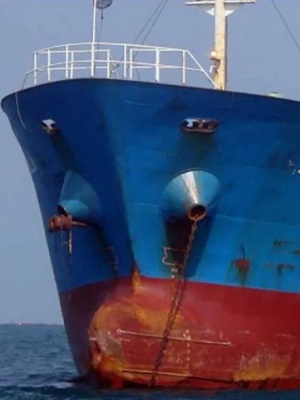
India
Ship Arrest
All about Ship Arrest in India and Admiralty Laws
View more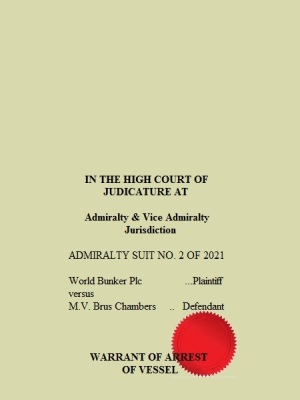
How to
Proceed?
Step-by-Step Guide to Arrest a Ship Anywhere in India
View more
How much
will it Cost?
Professional fees and expenses explained
View more
Who
We Are?
Shipping and Commercial Arbitration specialist
View more
Back to
Home Page
View more
CONTACT
Dr. Shrikant Pareshnath Hathi
Managing Partner,
BRUS CHAMBERS, Advocates & Solicitors,
8, Rajabahadur Mansion, 3rd Floor,
Ambalal Doshi Marg, Fort, Behind BSE,
Mumbai 400001, India
Phone: +91-9769946865
Web: More info
Email: shrikant@bruschambers.com
OR
Ms. Binita Hathi
Partner,
BRUS CHAMBERS, Advocates & Solicitors,
8, Rajabahadur Mansion, 3rd Floor,
Ambalal Doshi Marg, Fort, Behind BSE,
Mumbai 400001, India
Phone: +91-9769946864
Web: More info
Email: binita@bruschambers.com